
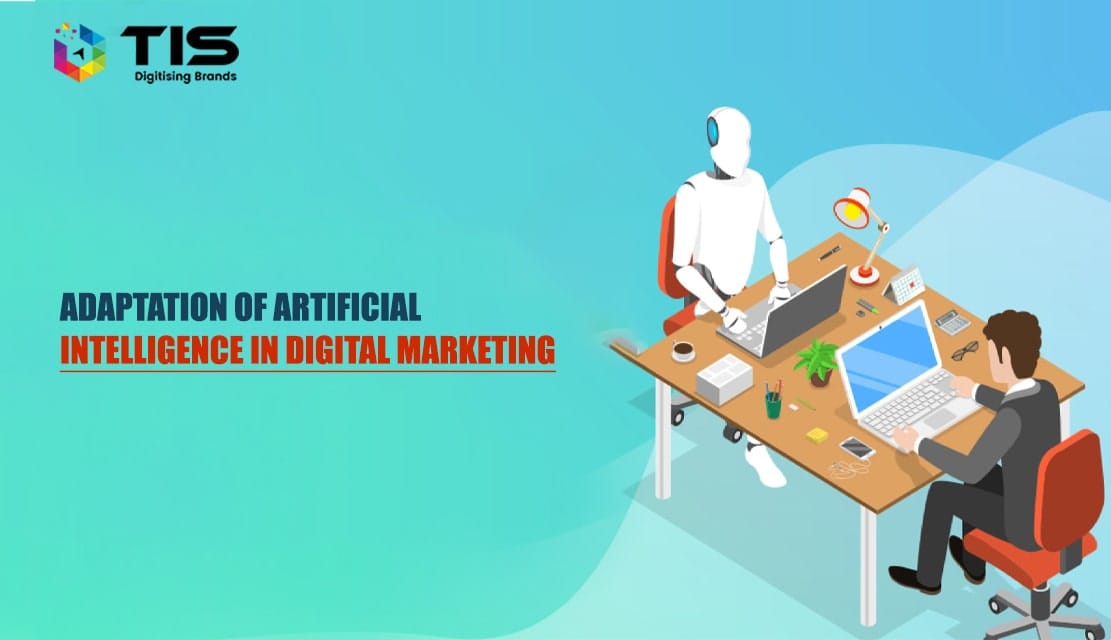
Marketing teams are no longer asking if they should use AI. They are asking how to use it well. In two years, generative tools have moved from experimental side projects into the core of content production, paid media, SEO, email, and customer analytics. According to the McKinsey Global AI Survey, AI adoption inside business functions has crossed a clear tipping point, and marketing leads the curve. The pressure now is operational: turning model access into measurable revenue, faster campaigns, and visibility inside AI search.
The shift is structural, not cosmetic. For most of the last decade, digital marketing innovation looked like incremental tooling: better dashboards, smarter ad placements, faster CMS platforms. AI breaks that pattern because it changes the underlying unit of work. Instead of executing campaigns, marketers are increasingly designing systems that execute themselves. Three forces are driving the change at the same time.
HubSpot’s 2026 marketing data shows the majority of marketers now use AI tools in daily workflows, and the productivity gains are real, not theoretical. The competitive question has moved from access to integration depth.
Generative AI now handles drafts, outlines, briefs, internal linking maps, schema markup, and metadata at scale. The actual differentiator is editorial governance: which prompts run, who reviews the output, and how the draft gets restructured for AI citation rather than only human reading. Pages that win in 2026 are written so that large language models can quote them cleanly inside answers. That means direct, self-contained explanations near the top of each section, structured FAQs that match conversational queries, and clear topical authority signals across the content cluster. Brands treating AI as a production accelerator alone are missing the bigger opportunity: rebuilding their content architecture so it gets cited inside generative answers, not just indexed.
AI segments audiences using behavioural signals instead of static demographics. According to Salesforce State of Marketing research, personalised journeys driven by AI consistently lift conversion rates and customer lifetime value when paired with a clean first-party data layer. The shift is from segmenting after the fact to predicting intent during the session. A returning visitor browsing pricing pages gets a different homepage hero than a first-time researcher reading thought leadership. Email subject lines, product recommendations, and on-site offers all adjust to the individual rather than the cohort. The technical lift is non-trivial because it depends on event tracking, consent, and identity resolution working together. The payoff is a measurable lift in revenue per visitor without proportional growth in media spend.
Google’s Performance Max, Meta Advantage+, and LinkedIn Predictive Audiences now run on machine learning that adjusts creative, placement, and bid in real time. Marketers no longer optimise campaigns at the keyword level. They feed the system audience signals, creative assets, and conversion goals, then let it allocate spend across surfaces. This is a fundamental change in how paid teams work. Manual bid management has shifted to creative production, audience strategy, and signal quality. The teams getting the strongest results in 2026 are the ones feeding the algorithm more first-party conversion data and more creative variants, then letting it find the combinations a human would not have tested.
Traditional SEO is being absorbed into a wider discipline that includes AEO (Answer Engine Optimization) and GEO (Generative Engine Optimization). Ranking on page one is necessary but no longer sufficient. Google’s own commentary on AI Overviews confirms that synthesised answers are now a default surface for many query types, which means brands need content built to be cited, not only ranked. Schema markup, entity clarity, author signals, and direct answer formatting have moved from nice-to-have to baseline. The brands building topical clusters around entities rather than isolated keywords are the ones showing up consistently inside generative answers across ChatGPT, Gemini, and Perplexity.
AI fills gaps left by cookie deprecation. Models reconstruct customer journeys across devices, sessions, and channels with probabilistic attribution, blending deterministic first-party data with statistical inference where signals are missing. This makes media mix decisions more defensible and gives finance teams cleaner numbers than the rule-based attribution models of the last decade. Marketing mix modelling, once a quarterly exercise reserved for enterprises, is becoming a continuous capability available to mid-market brands through AI-powered analytics platforms.
Chat interfaces have matured. Retrieval-augmented chat agents handle product discovery, FAQs, returns, and warm handoffs to sales. Gartner research on marketing operations shows that conversational AI is being deployed across the customer lifecycle rather than only at the support layer.
AI adoption is uneven across sectors, and the use cases that produce the strongest returns vary by industry. Retail and eCommerce lead on personalised recommendations, dynamic pricing, and AI-driven product discovery. Financial services lean on AI for compliance-aware content, lead scoring, and conversion path optimisation under tighter regulatory constraints. Healthcare and pharma use AI for content compliance review and audience segmentation while keeping a strict human approval layer. B2B technology brands focus on AI search visibility, account-based personalisation, and content velocity for long sales cycles. Real estate and education are using conversational AI to qualify enquiries and route them to human advisors. The pattern is consistent across all of these: the brands seeing measurable gains are the ones treating AI as an operating change rather than a tooling change.
A direct side-by-side makes the shift easier to plan around.
| Function | Traditional Approach | AI-Driven Approach in 2026 |
|---|---|---|
| Audience Targeting | Demographic segments, manual lookalikes | Predictive intent modelling on first-party signals |
| Content Creation | One draft, manual iteration | Multiple variants generated, edited, and tested in hours |
| SEO | Keyword targeting for rankings | Topical authority built for AI citation and Overviews |
| Paid Media | Manual bid management, A/B testing | Automated bidding, multivariate creative, real-time optimisation |
| Email Marketing | Batch-and-blast with basic segments | Triggered, individually timed, dynamically personalised |
| Attribution | Last-click or rule-based multi-touch | Probabilistic, ML-driven media mix modelling |
| Customer Support | Static FAQ, ticket queues | Retrieval-augmented chat agents with sales handoff |
Most teams underestimate the operating model behind successful AI use. Tooling is the easy part. What separates leaders from laggards is governance and skill.
The companies seeing real returns are not those with the most tools. They are the ones that rebuilt workflows around AI rather than bolting it on.
The risks are manageable, but they are real. Statista’s tracking on AI in marketing documents rising concern over brand safety, factual accuracy, and data privacy. Common failure modes include unreviewed generative content that misrepresents the brand, over-reliance on automated bidding without guardrails, personalisation that crosses into discomfort, and compliance gaps around consent and AI disclosure. None of these block adoption. All of them require policy.
TIS works with B2B and consumer brands to make AI marketing investments produce measurable outcomes. Engagements typically span digital marketing strategy and execution across SEO, paid media, content, and analytics, combined with AI-powered content creation services built for both human readers and generative search engines. The goal is not AI for its own sake. It is faster pipeline, lower acquisition cost, and visibility in the surfaces buyers actually use.
Audit your current marketing stack against three questions. Where is AI saving time without producing measurable revenue lift? Where is content being published without being structured for AI citation? Where is data sitting unused that a model could act on inside the session? The answers usually point to the first three projects worth funding. Start small, instrument carefully, and only scale what shows a defensible lift against a clear baseline.
The brands that move now are setting the benchmarks that everyone else will be measured against in twelve months. The window for catching up is narrowing.
Related reading: AI in Content Marketing: Automating Creativity and Driving Engagement.
AI is changing digital marketing across four layers: content production at scale, predictive personalisation, automated paid media bidding, and visibility inside AI search engines. The biggest shift is structural. Marketing teams are rebuilding workflows around generative and predictive models rather than adding tools to existing processes. Brands that integrate AI deeply see faster campaign cycles, lower acquisition costs, and stronger presence in answer-driven search surfaces.
No, but it is reshaping which roles grow and which contract. Routine production tasks like first-draft copy, basic reporting, and manual bid adjustments are being absorbed by AI. Strategic, editorial, and analytical roles are expanding because someone has to direct the models, govern output quality, and translate performance data into business decisions. The marketers who learn to direct AI well are gaining leverage, not losing relevance.
Traditional digital marketing relies on manual segmentation, scheduled campaigns, and after-the-fact reporting. AI marketing uses predictive models to act on signals in real time, generates and tests content variants in parallel, and optimises spend automatically. The two are not separate disciplines anymore. AI is becoming the default operating layer beneath SEO, paid media, content, email, and analytics across every mature marketing organisation.
AI accelerates research, brief creation, drafting, and internal linking, while also helping content meet the structural standards required by AI search. Pages built for AI citation use direct answers, semantic clarity, and topical depth. The result is dual visibility: ranking on Google for traditional queries and being quoted inside ChatGPT, Gemini, Perplexity, and AI Overviews. That combination is where modern SEO ROI now sits.
The main risks are unreviewed generative content damaging brand credibility, automated bidding burning spend without guardrails, personalisation that feels intrusive, and compliance gaps around data privacy and AI disclosure. Each risk is manageable with human-in-the-loop review, clear governance policies, transparent disclosure practices, and measurement that tracks revenue lift rather than only productivity. AI maturity is mostly an operating-model challenge, not a technology one, which is why governance matters more than tooling.
Start with a narrow, measurable pilot. Pick one workflow such as content production, paid media optimisation, or lead scoring. Define the baseline metric before deploying anything. Add human review checkpoints. Measure lift over a full cycle, not a week. Once the pilot proves out, expand into adjacent workflows. Trying to transform every channel at once is the most common reason AI programs stall before they show ROI.

© 2026 TIS. All rights reserved.