
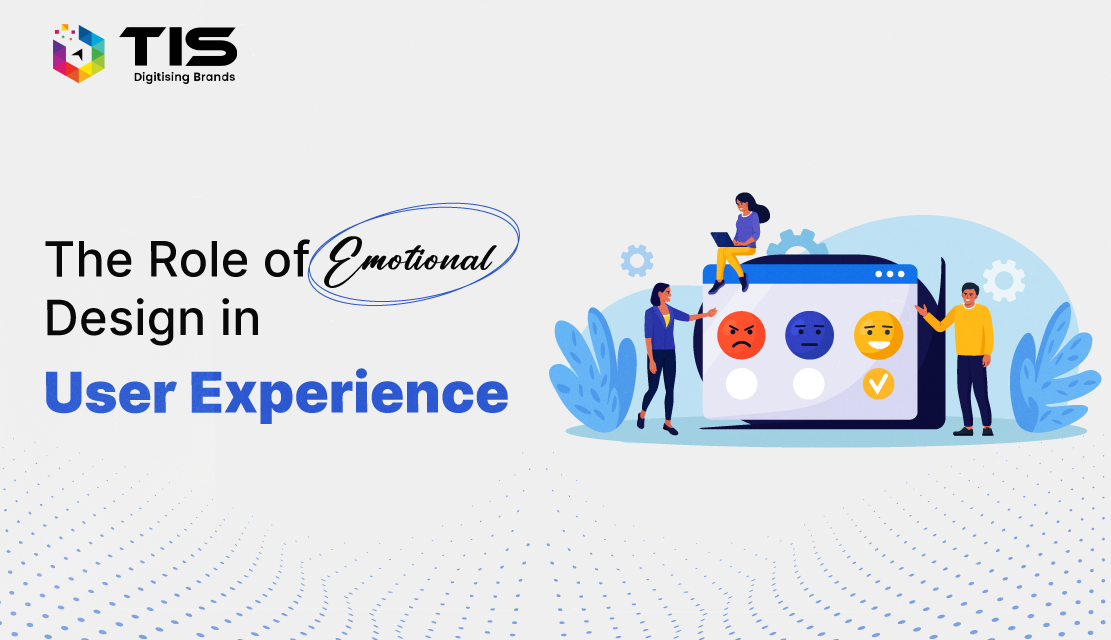
Most product decisions are not made on a spreadsheet. They are made in a moment of feeling, then justified later with logic. That is the territory emotional design works in. When a homepage feels trustworthy, a checkout feels effortless, or an onboarding screen feels welcoming, the user is not consciously thinking about colors, copy, or microinteractions. They are deciding whether to stay, buy, or return. For business leaders, this matters because emotion shapes the metrics that show up in the boardroom: conversion rate, retention, average order value, and lifetime value. This blog explains how emotional design works, why it moves revenue, and how to apply it without guesswork.
Emotional design is the deliberate practice of shaping how a product, interface, or experience makes a user feel at each interaction. It is not decoration. It is a structured discipline grounded in cognitive science, behavioral research, and interaction design. The most cited framework comes from cognitive scientist Don Norman, who outlines three levels of emotional processing: visceral, behavioral, and reflective. Each level corresponds to a different moment of the user experience and a different design decision.
At the visceral level, users react before they think. A clean layout, a confident typography choice, or a calm color palette signals quality in milliseconds. At the behavioral level, users judge whether the product actually helps them get something done. Friction, clarity, and pace dominate this stage. At the reflective level, users form opinions afterward: does this brand make me feel smart, respected, or proud to recommend? Business growth comes from designing intentionally across all three.
| Level | What It Influences | Design Levers | Business Metric Affected |
|---|---|---|---|
| Visceral | First impression, perceived credibility, gut reaction | Typography, color, imagery, layout balance, motion | Bounce rate, time on page, first-visit conversion |
| Behavioral | Ease of use, sense of control, task confidence | Microinteractions, feedback states, navigation logic | Task completion, checkout completion, support tickets |
| Reflective | Memory, identity, advocacy, repeat intent | Brand voice, storytelling, post-purchase moments | Retention, repeat purchase, NPS, referral rate |
The link between emotion and revenue is now well documented across multiple research bodies. A Forrester study of customer experience leaders found that how interactions make a customer feel is one of the three core dimensions that separates high-growth companies from laggards over time, with CX leaders consistently outperforming on shareholder return. Harvard Business Review research has shown that customers who recall their best experiences with a brand spend significantly more than those who recall poor ones, with the gap reaching as high as 140 percent in certain categories.
PwC has also reported that a single negative experience is enough for roughly one in three customers to walk away from a brand they previously loved, as detailed in its 2025 Customer Experience Survey. The point is not that customers are fragile. The point is that emotion is the silent filter through which every interaction is evaluated, and design is the most direct lever a business has to shape it.
For a business to take emotional design seriously, the connection to specific metrics has to be explicit. The following are the most common growth outcomes where intentional emotional design moves the needle:
These are not soft outcomes. They are revenue, margin, and efficiency outcomes that compound over time.
Emotional design is not a homepage exercise. It runs through every touchpoint a user encounters. A few practical examples:
Onboarding. First-time users decide whether a product is worth their attention within the first few screens. Tone of voice, progress indicators, and small wins early on shift the user from cautious to committed.
Checkout and payment. Anxiety peaks at the moment money changes hands. Visual reassurance, trust badges placed contextually, clear error recovery, and confident button states reduce abandonment without changing the offer itself.
Empty states and error screens. These are often treated as edge cases, yet they are emotional pressure points. A well-designed error screen turns frustration into trust.
Post-purchase communication. Order confirmation, shipping updates, and thank-you screens are revenue moments disguised as utilities. They shape whether the customer comes back.
Customer support touchpoints. The way a chatbot greets a user, the tone of a refund page, or the speed of an acknowledgment email all leave emotional residue that influences renewal and referral. Even small details, such as whether a system says “we are looking into this” versus “something went wrong on our end,” shape whether users see the brand as accountable or evasive in difficult moments.
Two assumptions slow down enterprise adoption. The first is that emotional design is the same as visual design. Visual choices matter, but the deeper work happens in interaction logic, copy, timing, and the rhythm of feedback the interface provides. A perfectly styled screen with a confusing button hierarchy or vague error messages will still create frustration, and frustration is an emotional state that directly damages conversion. The second is that emotional design is harder to measure than functional design. In practice, it is measurable through behavioral analytics, session quality data, qualitative usability testing, sentiment analysis on support transcripts, and post-interaction surveys. The discipline is not abstract. It is observable in user behavior and revenue patterns once the right metrics are in place.
A third misconception worth addressing is that emotional design is a creative function disconnected from engineering or product. In strong teams, it is built into product requirements, copy systems, design tokens, and analytics events from the start. Treated as a downstream styling pass, it consistently underdelivers. Treated as a core product principle, it compounds across releases and gives every team, from marketing to support, a shared language for what the experience should feel like.
For organizations starting out, a structured approach prevents emotional design from becoming a subjective debate:
This is also where specialist support matters. TIS works with brands on this exact discipline through its UI/UX design services, combining behavioral research with interaction design to engineer experiences that perform, not just look polished. For organizations rebuilding their digital storefront or product surface, TIS also offers full website design services that bake emotional design principles into the structure from day one rather than treating them as a final polish.
Product parity is the new normal. Most categories have several functionally adequate options, and switching costs are lower than ever. The differentiator left is how the experience makes the user feel during and after the interaction. Brands that treat emotional design as a growth lever rather than a styling exercise consistently see stronger retention, lower acquisition cost, and higher lifetime value. The companies that ignore it are competing on price, which is the most expensive position to defend.
There is also a shift in how customers discover and evaluate brands. AI-driven search, social proof, and peer recommendations now play a larger role than ever in shaping first impressions, and the emotional residue of a customer interaction often shows up publicly in reviews, screenshots, and shared experiences. A frustrating onboarding flow or an unclear cancellation page is no longer a private failure. It becomes part of the brand narrative. Designing for the right emotional outcome is therefore not just a product decision. It is a brand protection decision.
Leadership teams that take this seriously typically start with two moves. They appoint an owner for the emotional quality of key journeys, separate from feature ownership. And they instrument those journeys with both behavioral and sentiment metrics so that emotional outcomes are tracked with the same rigor as conversion or churn.
For a deeper view on the design philosophy that underpins this work, read our companion piece on user-centered design and putting users first in your process.
Emotional design is the practice of shaping how a product or interface makes users feel at each step of their experience. It uses visual, interaction, and language choices to influence trust, confidence, and satisfaction throughout the journey. Done well, it turns a functional product into one that users actively prefer, recommend, and return to, which directly improves business metrics like conversion, retention, and customer lifetime value.
Emotional design affects revenue by influencing the decisions users make at high-stakes moments such as signup, checkout, and renewal. When interactions feel clear, confident, and reassuring, users complete more actions and abandon fewer journeys along the way. Over time, this raises conversion rates, increases repeat purchases, lowers support costs, and improves referral volume, all of which compound into measurable revenue and margin gains for the business.
No. B2B buyers are influenced by emotion just as strongly as consumers, often more so given the personal risk in enterprise decisions. Confidence, clarity, and perceived competence shape vendor shortlists, demo conversions, and renewal decisions. Emotional design in B2B shows up in dashboard usability, onboarding tone, sales collateral, and support experience, all of which affect deal velocity and account retention.
UX design covers the full process of structuring usable, efficient, and accessible experiences. Emotional design is a specific layer within UX focused on how each interaction makes the user feel at a given moment. Strong UX without emotional design feels functional but forgettable. Emotional design without strong UX feels appealing but frustrating in practice. The two work together to create experiences that are both effective and memorable for users.
Yes, through a mix of behavioral and qualitative signals tracked over time. Behavioral data includes bounce rate, task completion, checkout abandonment, repeat visits, and support ticket volume. Qualitative inputs include usability testing sessions, sentiment analysis on reviews, and post-interaction surveys. Together they show whether intended emotions, such as trust or confidence, are actually being felt by users and where targeted design changes are needed to improve outcomes.

© 2026 TIS. All rights reserved.