
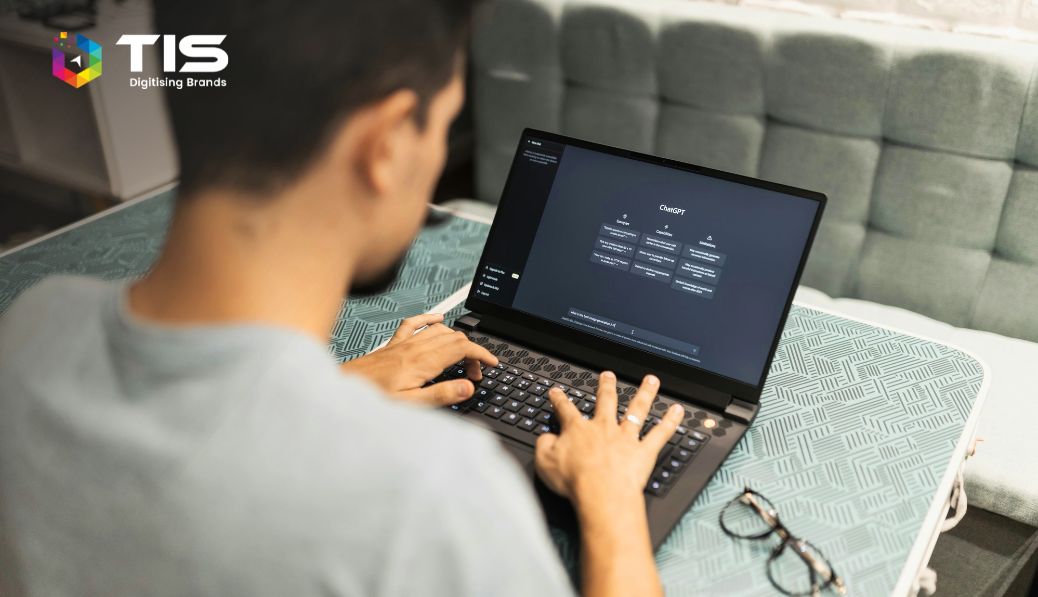
Search behaviour has shifted faster than most content teams have updated their playbooks. Buyers now ask ChatGPT, Perplexity, Claude, and Google AI Overviews questions they used to type into Google, and they often act on the answer without clicking a single link. The brands that show up inside those answers are not always the ones with the most pages or the biggest backlink profiles. They are the ones whose content is structured to be extracted, attributed, and trusted by language models. This guide explains how to build that kind of content, with a practical framework you can apply to existing pages and new ones.
Traditional SEO rewarded the page that earned the click. AI search rewards the passage that earns the citation. A typical Perplexity answer pulls from three to four sources out of roughly ten pages evaluated, and ChatGPT’s web mode surfaces an even tighter set. If your page is not in that retrieval pool, the buyer never sees you, even if you rank on page one of Google.
The shift is measurable. The peer reviewed Princeton, Georgia Tech and IIT Delhi GEO study presented at ACM SIGKDD 2024 tested nine optimisation tactics across 10,000 queries and found that structured changes such as adding statistics, quotations, and source citations can lift visibility in AI responses by up to 40%. Gartner separately predicted that traditional search engine volume will drop by 25% by 2026 as users move queries to AI assistants. The implication for B2B brands is direct: optimise for citation, not just ranking.
A second pattern matters for decision makers. AI referral traffic, while still small in absolute volume, consistently converts at higher rates than traditional organic traffic because users arrive after the AI has already pre qualified the recommendation. When ChatGPT names your service in response to a buyer prompt, that buyer lands with stronger intent than a generic search visitor. Citation visibility therefore acts as both a top of funnel awareness signal and a bottom of funnel trust signal at the same time. Teams that treat AI search as a separate channel from SEO usually under invest in it. The right framing is to treat citation visibility as the new measure of content authority, sitting alongside rankings rather than replacing them.
AI ready content is content that a retrieval system can parse, chunk, and quote without losing meaning. Three properties matter most:
None of this replaces classic SEO. ChatGPT’s search layer relies on Bing’s index and Gemini relies on Google’s. If your page is not indexed and ranked, the AI never considers it. AI optimisation extends SEO, it does not bypass it.
Lead every section with a 40 to 60 word direct answer to the implied query, then expand. Retrieval systems scan for a clean, confident sentence they can lift. Contently’s 2026 analysis noted that a large share of ChatGPT citations come from the first third of a page, and cited passages use definitive phrasing nearly twice as often as hedged writing. Bury the answer and you lose the citation.
The Princeton GEO study isolated three tactics that consistently outperformed others: adding statistics, including direct quotations from named experts, and citing credible external sources. Each created roughly 30 to 41 percent visibility gains depending on the domain. The compound effect of “statistic plus source plus year” is what generative engines treat as verifiable evidence.
Models do not read pages, they read chunks. Each H2 or H3 block should make sense on its own without depending on earlier paragraphs. Replace pronouns like “it” or “this” with the actual subject. Avoid clever transitions that only work in sequence. A good test: copy a section into a blank document and read it. If it still answers a question, it is citable.
Schema markup such as Article, FAQPage, and HowTo helps retrieval systems classify content quickly. Semantic HTML, accurate dateModified fields, and an llms.txt file at the domain root all reduce parsing friction. Google’s structured data documentation remains the cleanest reference for implementation.
Perplexity in particular weights recency heavily. Industry reporting suggests roughly two-thirds of AI bot hits target content published within the past year. The right response is not to republish constantly but to refresh evergreen pages with current statistics, updated citations, and accurate timestamps when the underlying facts change.
Most B2B teams confuse these terms or pick one. They are complementary layers of the same discipline.
| Discipline | Primary Goal | Where It Shows Up | Core Tactics |
|---|---|---|---|
| SEO | Rank a page in the index | Google, Bing organic results | Keywords, backlinks, technical health |
| AEO (Answer Engine Optimization) | Win the direct answer | Featured snippets, voice search, AI Overviews | Question first headings, FAQ schema, concise answers |
| GEO (Generative Engine Optimization) | Get cited inside AI responses | ChatGPT, Perplexity, Claude, Gemini | Statistics, quotations, source attribution, chunked structure |
For a deeper view on how these layers connect, our team has covered the discipline in detail in our piece on generative engine optimisation.
Citation measurement is still maturing, but a workable stack already exists. In GA4, build a custom channel grouping that captures referrals from chatgpt.com, perplexity.ai, and gemini.google.com so AI traffic is not hidden inside generic referral data. Run a weekly manual check of your top buyer prompts in ChatGPT and Perplexity, logging whether you are cited, which URL appears, and which competitors show up beside you. For Google AI Overviews, both Ahrefs and Semrush now track which queries trigger an overview and whether your page is featured. Combine these signals into a simple dashboard that compares citation share against organic share for the same keyword cluster. Over a 90 day window the trend lines tell you which structural changes are working and which pages need a second pass.
Our content and search teams at TIS help B2B and enterprise brands restructure existing libraries, build new citation worthy assets, and measure visibility across ChatGPT, Perplexity, Claude, and Google AI Overviews. If your current content ranks but never gets cited, the fix is rarely a full rewrite. It is a structural intervention guided by retrieval logic. We start with a citation audit of your top revenue pages, map the gaps against buyer prompts that matter to your pipeline, and rebuild the passages that need to earn extraction. Explore our generative engine optimisation services and answer engine optimisation services, or speak with our team if you want a focused review of your existing library.
If you are starting from zero, three actions create the fastest movement. First, identify the ten buyer prompts that are most likely to generate revenue if you were cited, and run them in ChatGPT and Perplexity to establish a baseline. Second, take the five highest authority pages on your site and restructure their introductions to lead with a 50 word answer block, then add at least one sourced statistic per major section. Third, fix dateModified on those pages and apply Article and FAQPage schema. None of these steps require a redesign or a budget approval cycle, and together they cover the structural foundation that the Princeton GEO research identified as highest leverage. Larger programmes around entity building, brand mentions, and original research can follow once the baseline is in place.
AI ready content is structured so that language models can extract, attribute, and quote it cleanly. That means leading sections with a direct answer, writing self-contained paragraphs, supporting claims with cited statistics or expert quotes, and using schema markup. The goal is not just to rank a page but to make individual passages citable inside ChatGPT, Perplexity, and Google AI Overviews when a buyer asks a relevant question.
Traditional SEO focuses on ranking a page so users click through. GEO focuses on getting passages cited inside AI generated answers, where users may never click at all. SEO optimises for the index, GEO optimises for retrieval and synthesis. The two work together since AI engines often pull from existing search indexes, but GEO adds structural and evidence based tactics that classic SEO does not require.
Both engines favour formats that are easy to extract. That includes clear definitions near the top of a page, numbered how to steps, comparison tables, FAQ blocks, and sections supported by sourced statistics. Perplexity weights recency and source citations heavily, while ChatGPT favours structural clarity and authoritative tone. Long narrative essays without clear answer blocks tend to underperform in both systems.
Timelines vary by domain authority and starting visibility, but most teams see citation movement within four to twelve weeks of restructuring high value pages. Mid ranked pages often respond fastest because retrieval systems already consider them relevant. New pages take longer since they need to be indexed and accumulate brand mention signals before AI engines treat them as trustworthy sources.
For most B2B brands the answer is no. Blocking these crawlers removes any chance of being cited and surrenders visibility in a fast growing channel where conversion rates often exceed traditional organic traffic. Established brands with strong recognition may choose to block training bots while still allowing live search bots. Either way, the decision should be made deliberately, documented in your robots policy, and reviewed each quarter.
No. The same page can serve both audiences if it is structured for extraction. Lead with the answer, use clear headings, support claims with sources, and apply schema markup. These tactics improve traditional rankings and AI citation odds at the same time. Creating separate AI versions usually fragments authority and dilutes the freshness signal that both Google and Perplexity reward.
How to Create AI Readable Content That Ranks Everywhere
 C - 81C, Sector - 8, Noida 201301, India
 info@tisindia.com
 (+91) 9811747579
1025 Beamon Drive, Franklin 37064 Tennessee, USA
info@tisindia.com
+1 424 283 4688
Sveavagen 34 111 34 Stockholm, Sweden
info@tisindia.com
A-10, Sahastradhara Rd, Doon IT Park, Dehradun, Uttarakhand
info@tisindia.com
(+91) 9811747579
(+91) 9811747579
1025 Beamon Drive, Franklin 37064 Tennessee, USA
info@tisindia.com
+1 424 283 4688
Sveavagen 34 111 34 Stockholm, Sweden
info@tisindia.com
A-10, Sahastradhara Rd, Doon IT Park, Dehradun, Uttarakhand
info@tisindia.com
(+91) 9811747579

© 2026 TIS. All rights reserved.