
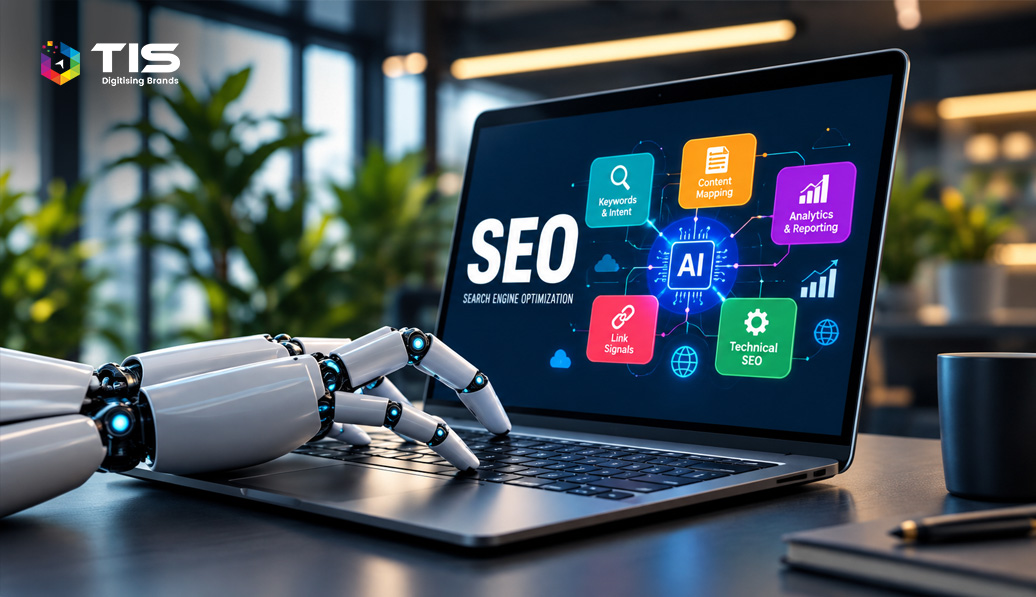
Organic clicks are shrinking, but visibility is not. AI Overviews, ChatGPT answers, Perplexity citations, and Gemini summaries now resolve queries directly on the results surface, leaving legitimate demand invisible inside Google Analytics. If your dashboards still equate SEO success with sessions and rankings, you are measuring a shrinking sliver of the funnel. This guide walks you through how to build an AI SEO measurement stack that captures brand mentions, AI citations, assisted revenue, and query influence, so your reporting reflects the way search actually works in 2026.
Search behavior has changed faster than analytics have. Zero-click queries were already common, and generative answers have accelerated the trend. Gartner has projected that traditional search engine volume will drop meaningfully as consumers shift to AI chatbots and virtual agents, a shift that reduces clicks even when your content is being read and cited.
Google Search Console still reports impressions and clicks, but it does not tell you when your page was pulled into an AI Overview, when Perplexity cited your paragraph, or when ChatGPT recommended your product by name. Industry studies from Ahrefs and Search Engine Land have consistently shown that pages appearing in AI Overviews receive fewer clicks than the same position in classic blue links. The impression is happening, the influence is happening, the click is not.
That mismatch creates a reporting crisis. Marketing teams look underperforming to finance, SEO looks like a cost centre, and content investment gets cut at exactly the moment it matters most. Fixing this starts with rebuilding what you measure and how you report it, so the story stays honest even as click volume declines.
There is also a competitive dimension. When your competitors instrument AI visibility early, they see which prompts they own, which paragraphs get cited, and which pages influence buying conversations. Teams that keep reporting only classic rankings enter budget cycles with weaker evidence and lose ground quarter after quarter. The measurement gap becomes a strategy gap.
An AI SEO measurement stack is a connected set of tools, data sources, and reports that quantify how your brand performs across both traditional and generative search surfaces. It captures four types of signal that legacy SEO reporting ignores:
The point of the stack is not to replace Google Search Console. It is to sit alongside it so leaders can see the full picture: rankings, impressions, citations, mentions, and revenue in one line of sight.
A useful stack has five layers, each with a clear job. The table below maps what each layer measures and the tool categories that fit.
| Layer | What it measures | Tooling category |
| Traditional SEO | Rankings, impressions, clicks, indexation | Google Search Console, Ahrefs, Semrush |
| AI visibility | Citations and mentions inside ChatGPT, Gemini, Perplexity, Copilot | Profound, Otterly, AthenaHQ, Peec AI, Semrush AI Toolkit |
| AI Overview tracking | Presence and position inside Google AI Overviews and AI Mode | Ahrefs AI Overview tracker, Semrush, seoClarity |
| Referral and behaviour | Sessions and engagement from ChatGPT, Perplexity, Copilot referrals | GA4 with custom channel groups, server logs |
| Business outcomes | Assisted pipeline, revenue, brand lift | CRM (HubSpot, Salesforce), MMM, brand surveys |
Start with the questions that decide revenue. Interview sales, mine chat logs, and pull top-of-funnel keywords from Search Console. Convert each into 3 to 5 natural language prompt variants, since LLMs answer prompts, not keywords. Group them by funnel stage: category education, comparison, vendor evaluation, and post-purchase. A prompt universe of 150 to 300 well-chosen prompts usually covers a mid-market B2B category. Keep the list living, review it monthly, and retire prompts that no longer reflect how buyers ask.
Run your prompt universe through the major AI answer engines weekly. Record whether your brand is cited, named, or absent, and note which competitors appear. Tools such as Profound, Otterly, Peec AI, and the AI Toolkit inside Semrush automate this at scale. If budget is tight, a scripted rotation using vendor APIs will give you the same baseline.
Layer an AI Overview tracker onto your existing rank tracker so you can see which queries trigger an AI Overview, whether your domain is cited inside it, and how the traditional ranking behaves in parallel. Google Search Central documentation confirms that structured data and clear content chunks make pages easier for Google to pull into these surfaces.
By default, referrals from chat.openai.com, perplexity.ai, gemini.google.com, and copilot.microsoft.com land in generic buckets. Create a custom channel group called AI Assistants, define the source and medium rules, and mirror it in Looker Studio. This one change usually reveals a stream of high-intent traffic that had been hiding in Direct or Other.
Push the AI Assistants channel into your CRM and marketing automation platform. Tag any deal or MQL whose first or assisting touch came from an AI referral. Over a quarter, you will have enough data to model assisted pipeline, which is the number executives actually care about. Research from Gartner has repeatedly flagged that leaders who cannot tie AI channels to revenue will underinvest in the surfaces where their buyers are already spending time.
Quantitative citation data is stronger when paired with a small quarterly brand survey and a share of voice measure across social listening tools. Together, they explain why your assisted revenue is trending up or down, not just that it is moving.
Replace the old top-line SEO scorecard with a smaller, sharper one. The five metrics below cover both the classic and the generative side of search without overwhelming stakeholders.
A measurement stack only earns its keep when leaders read from it. Build a weekly operational view for the SEO team covering prompt-level citations, AI Overview presence, and content freshness. Layer a monthly executive view over it that shows AI citation share, assisted pipeline, and brand mention trends against a competitor set. Once the reporting rhythm is set, content, PR, and product marketing can align around the same signals, and SEO stops being defended and starts being funded.
The teams that win the next three years of search will not be those with the biggest content budgets, they will be the ones with the sharpest instrumentation. Clicks are collapsing, but demand is not. Building the right measurement stack now gives you a defensible view of where your brand shows up, why it shows up, and what that visibility is worth in pipeline. That is the reporting conversation your CFO will actually respect.
At TIS, we help B2B and eCommerce teams design measurement stacks that survive the shift to AI search. Our AI SEO services, generative engine optimization services, and answer engine optimization services cover prompt research, citation tracking, GA4 rebuilds, and content refreshes that keep your brand visible where buyers now ask questions. If you want a deeper view on the content side of the equation, read our companion guide on how to build AI-ready content that gets cited by ChatGPT and Perplexity.
Ready to see what your AI SEO scorecard should look like? Talk to a TIS strategist for a free measurement stack audit and a competitor citation benchmark.
For a deeper look at the content side of AI search, read How Brands Can Track AI Citations Across ChatGPT, Gemini, and Perplexity.
An AI SEO measurement stack is a connected set of tools and reports that tracks how your brand performs across both traditional search engines and AI answer engines like ChatGPT, Gemini, Perplexity, and Google AI Overviews. It combines rankings, citations, brand mentions, referral traffic, and assisted revenue in a single view, so leaders can measure real influence rather than only clicks. It replaces the outdated view that SEO success equals sessions.
Traditional metrics like rankings and organic clicks only capture a shrinking part of search behaviour. Generative answers now resolve many queries directly, so users read your content without visiting your site. Google Search Console cannot show AI Overview citations, ChatGPT mentions, or Perplexity references. Without a broader measurement stack, real demand looks like a decline, which pushes teams to cut investment in channels that are actually driving pipeline.
Purpose-built platforms like Profound, Otterly, AthenaHQ, and Peec AI monitor how often your brand is cited or mentioned across ChatGPT, Perplexity, Gemini, and Copilot for a defined prompt universe. Semrush and Ahrefs have added AI visibility modules to their existing suites. Smaller teams can script rotations against vendor APIs. The right pick depends on prompt volume, competitor set, and whether you need API access for internal dashboards.
GA4 does not label AI referrals cleanly by default, so most traffic from ChatGPT, Perplexity, Gemini, and Copilot lands in Direct or generic Referral buckets. Fix this by creating a custom channel group called AI Assistants and adding source and medium rules for each engine. Mirror the group in Looker Studio, then push the channel into your CRM so sales can see when AI-assisted sessions become qualified leads.
Prompt-level citation data should refresh weekly because AI answer engines change outputs frequently. AI Overview tracking is best on a daily or weekly cadence for priority queries. GA4 channel definitions, CRM mappings, and prompt universes deserve a quarterly review to reflect new competitors, new engines, and shifting buyer questions. Executive dashboards work well on a monthly cadence with quarterly deep dives against a defined competitor benchmark set.
Yes, particularly for local and service businesses where buyers now ask AI assistants for recommendations before visiting a website. A lean stack for smaller teams can begin with a defined prompt list, a weekly scripted citation check, a GA4 AI Assistants channel, and a simple monthly report. Enterprise tooling is not required to begin, only a clear view of the prompts, competitors, and outcomes that matter most.

© 2026 TIS. All rights reserved.