
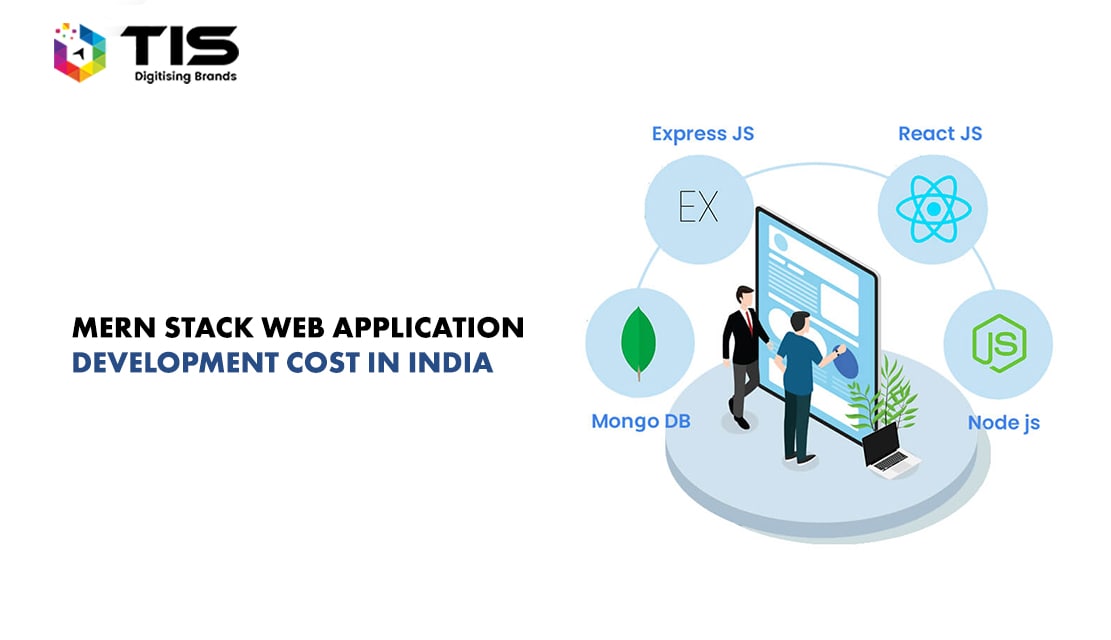
Pricing a MERN stack project is rarely about one number. It is about understanding which engineering decisions move the budget, which trade-offs are safe, and where India fits in the global delivery map. JavaScript continues to dominate modern web development, and Node.js has become the most widely used web technology in the Stack Overflow Developer Survey 2024, used by more than 40% of professional developers. That shift has pushed MongoDB, Express.js, React, and Node.js into the default stack for product teams. This guide breaks down what you actually pay for, how Indian rates compare globally, and how to plan a defensible budget.
MERN consolidates the application layer under a single language. Frontend, backend, and the data interchange format all run on JavaScript, which removes context switching across teams and shortens delivery cycles. For decision-makers, the practical benefits are concrete:
According to the MongoDB company overview, the database is used by more than 50,000 customers globally, including organizations across financial services, retail, and healthcare. That breadth of adoption matters when you assess vendor risk and long-term maintenance.
The total project cost is shaped by a defined set of variables. Treat each as a budget lever rather than a fixed input.
Indian rates remain among the most competitive globally without compromising engineering quality. The table below sets realistic 2026 benchmarks for budgeting purposes.
| Project Type | Typical Scope | Estimated Timeline | Indicative Cost Range (USD) |
|---|---|---|---|
| MVP or Proof of Concept | Core feature set, single user role, basic dashboard | 6 to 10 weeks | $6,000 to $15,000 |
| Mid-size Web Application | Multiple modules, third-party APIs, admin panel | 3 to 5 months | $15,000 to $40,000 |
| Enterprise-grade SaaS | Multi-tenant, role-based access, analytics, audit logs | 6 to 10 months | $40,000 to $100,000+ |
| Real-time or Data-heavy Platform | WebSockets, streaming, AI integration, complex reporting | 8 to 12 months | $60,000 to $150,000+ |
Hourly rates for Indian MERN developers typically fall between $18 and $45 depending on seniority, and dedicated monthly engagements sit in the range of $2,500 to $6,000. For context, equivalent US or UK rates often run $80 to $150 per hour, which is where the well-documented 60% to 70% cost differential originates, as outlined in Deloitte’s global technology outsourcing analysis.
The same scope can produce different invoices depending on how you contract delivery.
Sticker price rarely reflects total cost of ownership. Build these into your forecast before signing.
Lower spend is not a function of cutting rates. It is a function of removing waste from the delivery cycle.
TIS approaches MERN engagements through this lens. Our full-stack development engagements are built around outcome-led sprints, and our broader website development services cover the architecture, delivery, and post-launch support that determine long-term cost efficiency.
A MERN budget is rarely just engineering hours. When buyers compare quotes from vendors, they often miss that quoted figures bundle different layers of work. Breaking the cost into its functional components produces a more honest comparison.
This breakdown matters because vendors who underprice one layer almost always compensate by cutting from another. A quote that looks cheaper because it skips dedicated QA or has no architecture phase is borrowing cost from later phases of the product lifecycle.
Two teams quoting the same scope can deliver materially different outcomes purely based on engagement model. Fixed-bid contracts incentivise vendors to minimise scope interpretation, which leads to change orders. Hourly contracts can drift if velocity is not measured. Dedicated team models, when paired with clear sprint goals and a product owner on the client side, tend to deliver the most predictable cost-to-value ratio. For buyers planning a multi-quarter roadmap, the dedicated team model also locks in domain knowledge that would otherwise be lost between project handovers, which has compounding cost benefits over the second and third year of ownership.
India’s MERN ecosystem combines depth of talent, time-zone overlap with both Western and APAC markets, and mature engineering processes. Cities such as Bangalore, Hyderabad, Pune, and Delhi NCR host a dense concentration of full-stack engineers with experience across SaaS, fintech, ecommerce, and healthcare builds. Indian firms typically operate under ISO 27001 information security frameworks and well-defined NDAs, which addresses one of the most common procurement concerns for global buyers.
The supply side reinforces this. India’s developer base has grown rapidly, with strong year-on-year additions to the JavaScript talent pool reported by GitHub’s Octoverse 2024 report, which projects India to become the largest developer community on the platform by 2028. For buyers evaluating multi-year roadmaps, that pipeline reduces hiring and continuity risk.
Treat the cost question as a portfolio decision rather than a procurement line item. Define the business outcome first, then back into scope, then into engagement model. A well-scoped MVP with a clear post-launch roadmap will almost always outperform a large fixed-bid contract built on uncertain requirements. The right partner will challenge your assumptions before quoting, document the risks honestly, and build modular architecture that lets you expand without rewriting.
If you are evaluating vendors for an upcoming MERN build, the next step is a scoped technical discovery rather than a generic quote. TIS offers a complimentary architecture and budget review for qualified projects, which gives you a defensible cost model before any code is written. The output of that review typically includes a feature-level scope document, a recommended engagement model, an indicative budget range, a risk register, and a 90-day delivery plan you can take into procurement discussions with confidence.
MERN stack development in India typically ranges from $6,000 for an MVP to over $100,000 for enterprise-grade applications. Hourly rates fall between $18 and $45 depending on developer seniority, while dedicated monthly engagements range from $2,500 to $6,000 per resource. Final cost depends on feature scope, third-party integrations, compliance requirements, design complexity, and the engagement model chosen for end-to-end delivery and ongoing support.
India offers a 60% to 70% cost advantage driven by favourable cost-of-living economics, a large JavaScript talent pool, and mature delivery processes refined over two decades of outsourcing. The savings reflect operational efficiency rather than skill gaps. Indian MERN teams routinely deliver enterprise-grade SaaS, fintech, healthcare, and ecommerce platforms for global clients under the same engineering standards, security certifications, and agile frameworks used across Western markets today.
An MVP usually takes 6 to 10 weeks from kickoff to launch. A mid-size web application with multiple modules, admin panels, and integrations requires 3 to 5 months of disciplined sprint delivery. Enterprise-grade SaaS platforms with multi-tenant architecture, analytics, and compliance controls can take 6 to 10 months. Timelines depend on scope clarity, design maturity, third-party integration complexity, team size, and the engagement model selected.
Yes. MongoDB’s horizontal scaling, Node.js’s event-driven runtime, and React’s component model handle enterprise workloads effectively across high-traffic conditions. Companies such as Netflix, Uber, and Walmart use parts of the MERN ecosystem in production environments. For regulated industries, additional compliance layers, observability tooling, threat modelling, and third-party security audits should be planned into the architecture from the outset rather than retrofitted after initial launch.
Expect recurring cloud infrastructure spend, security and penetration testing cycles, performance engineering work, and post-launch maintenance budgets of 15% to 20% of total build cost annually. Many buyers also overlook costs tied to third-party API usage, observability platforms, library upgrades, and dependency patching. Surfacing these line items during initial scoping prevents budget surprises later and supports accurate total-cost-of-ownership forecasting across the application lifecycle.
Freelancers suit short tasks, bug fixes, and tightly scoped features with low coordination needs. Dedicated teams are more cost-efficient for projects longer than three months because they preserve domain context, reduce handoff overhead, and maintain consistent delivery velocity across sprints. For mission-critical products or long roadmaps, a dedicated team or managed delivery model offers the strongest balance of cost predictability, engineering quality, and accountability for outcomes.
For a side-by-side comparison of the two most popular full-stack JavaScript options, read our breakdown on MEAN stack web application development cost in India.
 C - 81C, Sector - 8, Noida 201301, India
 info@tisindia.com
 (+91) 9811747579
1025 Beamon Drive, Franklin 37064 Tennessee, USA
info@tisindia.com
+1 424 283 4688
Sveavagen 34 111 34 Stockholm, Sweden
info@tisindia.com
A-10, Sahastradhara Rd, Doon IT Park, Dehradun, Uttarakhand
info@tisindia.com
(+91) 9811747579
(+91) 9811747579
1025 Beamon Drive, Franklin 37064 Tennessee, USA
info@tisindia.com
+1 424 283 4688
Sveavagen 34 111 34 Stockholm, Sweden
info@tisindia.com
A-10, Sahastradhara Rd, Doon IT Park, Dehradun, Uttarakhand
info@tisindia.com
(+91) 9811747579

© 2026 TIS. All rights reserved.