
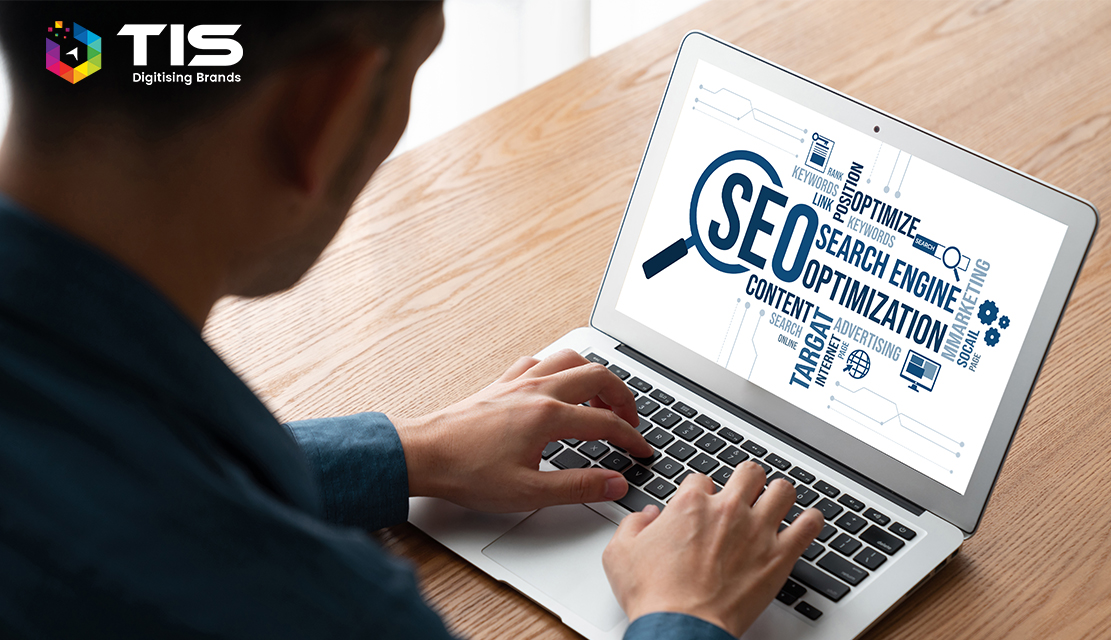
Search isn’t broken. It’s fragmenting. Google still commands dominant market share, but your customers now search everywhere – ChatGPT for research insights, voice assistants for quick answers, Reddit for authentic opinions and YouTube for visual how-tos. The question is not whether or not your business ranks on Google. It’s a case of whether your brand exists across the entire search ecosystem when decisions get made. This move to move search from central to distributed search fundamentally alters how businesses compete for visibility, and traditional SEO becomes only one element in a wider strategy for search-everywhere.
ChatGPT now gets more than 5 billion monthly visits with around 31% of prompts leading to web searches – opening up a completely new referral channel. But AI citation is the citation according to different rules from traditional ranking.
Domain authority is an exponential factor. Sites with more than 32,000 referring websites are 3.5 times more likely to be cited than sites with fewer than 200. Mention of the brand in platforms such as Reddit and review sites raises the probability of the citation.
Structured self-contained blocks of content work best. AI systems like to have information that is easily made clean and extractable: well-defined descriptions, step-by-step procedures, tables of comparisons and FAQ-style answers.
Your goal is to create modular expertise – knowledge blocks that stand alone while supporting a larger narrative.
Authoritative sourcing is non-negotiable. Author credentials, clear citations for data and having demonstrated first-hand experience are signs of trustworthiness to AI models. Generic corporate content that is not attributed gets filtered out.
The business implication is that brands that are optimized in the eyes of Google are not visible in AI-produced answers. You need content architecture that’s working for traditional search engines as well as large language models – expanding your content search presence into territories where purchase research increasingly occurs.
Around 8.4 billion voice assistants are now in use worldwide – more devices than there are people on planet Earth. Voice search behavior has distinct commercial intent. 76% of voice searches are related to “near me” or local searches, and users actively engage with voice search, usually by phone calls.
Conversational query structures are used instead of keyword fragments. Users ask, “What’s the best CRM software for a small business with 20 employees?” not “best CRM software SMB.” Your content must reflect how people speak.
Featured snippet positioning becomes the critical thing. Over 80% of voice search answers come from the top organic three. Voice assistants don’t search multiple sources – they pick one authoritative answer and read it out loud.
Page speed makes a disproportionate impact on voice search. Pages ranking for voice searches are 52% faster than average. Slow-loading pages are skipped no matter the quality of the content.
The strategic shift in voice search is rewarding businesses with a clear challenge to accessible conversational information architecture. Companies investing in holistic FAQ content, natural language optimization and local SEO infrastructure capture voice-powered inquiries competitors miss.
AI Overviews are now being displayed for about 15% of all searches in Google, with the percentage increasing day by day. Often, these summaries, generated by AI, are able to answer queries without the need to click. Organic click-through drops by almost 58% when the AI Overviews are shown.
Brand visibility without clicks nevertheless creates equity. Seeing your brand being referenced in AI Overviews helps build awareness and authority. When it comes to purchase decisions, prospects recall brands from their research stage, even if they don’t click.
Zero-click optimization becomes a discipline. Structure content to answer questions in 40-60 words, use bulleted lists, implement FAQ schema markup, and build clear, extractable blocks of information. You aim to be the source of AI systems reference.
Measurement frameworks must change from traffic. Monitor brand search volume, SERP feature ownership, citation frequency in AI answers, and assisted conversions. Success metrics have now added “share of AI conversation” and “citation authority score.”
The adaptation: Businesses that use solely organic traffic are facing declining returns. Optimize for visibility and authority for all elements on the SERP, considering search as one of the channels for building a brand and influencing decisions across multiple touchpoints.
The monolith in search of truth has broken apart. Users find out everywhere, on YouTube (2 billion monthly users), Reddit (which is increasingly in the forefront of Google), TikTok, LinkedIn, and industry forums. Each of the platforms has its own search algorithm and user intent patterns.
Video content isn’t optional. YouTube citation in Google AI Overviews rose 121% for e-commerce queries. Video is now seen as a primary content format for many types of queries by search engines.
User Generated Content Platforms – User-generated content platforms drive trust signals. AI systems increasingly refer to Reddit conversations, answers to questions on Quora, and review sites when evaluating the credibility of brands. The real voice of users is more effective than corporate marketing. Social proof becomes algorithmic input. Being on platforms such as Trustpilot, G2 and Capterra improves the likelihood of citation by about 3x.
Content repurposing reaches the maximum number of people. One essential understanding in the form of a blog post, video, infographic, podcast segment, or social series. Different search behaviors and platform algorithms are served by different formats.
The operational requirement: Effective search visibility requires integrated digital marketing in the areas of content creation, video production, social media management, review acquisition, and community engagement.
Google’s move to E-E-A-T (adding “Experience” to Expertise, Authoritativeness, Trustworthiness) is indicative of a fundamental shift. Search engines reward more than ever the content that reflects real first-hand experience that the AI cannot replicate.
Original research and proprietary data are uncopyable assets. First-party studies, customer data analysis and unique data sets make your brand a primary source. AI systems give preference to original rather than derivative content.
Author Credentials and by-lines is exponential. Content created by named experts with verifiable credentials is better than anonymous corporate posts.
Case studies provide evidence of practical experience. Detailed implementation examples with real clients, specific results and problems solved prove you’ve actually done the work.
The investment: Building the truly E-E-A-T requires long-term investment in original research, expert content creators and customer storytelling. Companies that are creating generic AI-generated content risk a loss in visibility.
The technical base is still important as more AI agents go about crawling and interpreting websites. Sites with clean technical SEO – get cited. Sites with technical debt – get ignored.
Structured data implementation is made mandatory. Schema markup: articles, FAQs, products, authors; AI systems are able to parse content with flawless accuracy. This is direct communication with the crawlers of AI.
Core Web Vitals and page speed have a direct effect on visibility. ChatGPT agents, bouncing from slow-loading pages with HTTP error 63%
There is no design but a mobile-first design. Google’s mobile-first indexing means your mobile experience controls your presence throughout your entire search.
Content architecture and internal linking represent topical authority. A clear structure helps AI systems to grasp your expertise domains.
Generative Engine Optimization (GEO) is now here and is very different from traditional SEO. Whereas SEO is about being optimized for results list rankings, GEO is about being optimized for citation in answers by AI systems used in ChatGPT, Perplexity, and Google AI Overviews.
GEO success factors are different from traditional ranking:
Citation-worthy content formatting puts clarity over engagement. GEO rewards brief, definitive answers, which AI can extract cleanly.
The cross-platform presence multiplies the citation probability. The same insight popping up throughout blog posts, Reddit, YouTube, and LinkedIn is a signal to AI models of authority.
First (topical) depth is better than breadth (surface). AI systems have a preference for citing specialists. Deep knowledge in certain areas helps to build citation authority.
The integration challenge: Businesses need to have parallel strategies – traditional SEO for Google rankings and GEO for AI citation. These strategies are not the same, but they do overlap.
Priority one: Take inventory of your existing search presence across platforms. Beyond Google rankings, check ChatGPT citations, voice search results, Reddit discussions, YouTube results and review platforms. Map your visibility gaps.
Priority two: Technical foundation implementation. Add thorough schema markup, optimize Core Web Vitals, be mobile excellent, and organize content with headers and FAQ sections.
Priority three: Develop authoritative and experience-based content. Invest in original research, in-depth case studies, expert author-written insights and proprietary data.
Priority four: Expand to multi platform presence. Repurpose your best insights on YouTube, LinkedIn, genuine participation on Reddit, podcasts and industry publications.
Priority five: Measure new indicators of success. Track Brand Search Volume, AI Citation Frequency, SERP Feature Ownership, Multi-Touch Attribution, and Assisted Conversions
Search in 2026 is not about mastering one platform or technique. It’s about creating omnipresent brand authority that can seem to be everywhere your customers look when they need answers, whether they’re typing into their Google, asking ChatGPT, talking to voice assistants or scrolling through social platforms. The businesses that are winning in this fragmented landscape aren’t pursuing algorithms – they’re creating real expertise, technical excellence and a presence across platforms that makes them inescapable references no matter how and where people search. The question is not whether to adapt to these trends. It’s whether you’ll take the lead in adaptation or be a reactionary to the competitors who got there first.
How does optimizing for ChatGPT differ from traditional Google SEO?
The optimization goal of ChatGPT is citation-worthiness rather than ranking factors. While Google SEO is focused on keyword targeting, backlinks, and on-page optimization, ChatGPT citation is reliant on domain authority (sites with 30K+ referring domains rank best), structured self-contained content blocks, author credentials and presence on multiple trusted sites like Reddit and review sites. The aim of it changes from having a position in results lists to being the source of AI models referenced in generated answers.
What’s the most important technical change for voice search optimization?
Featured snippet optimization is most important for voice search. More than 80% of voice responses are from featured snippets or the top three voice results. Structure content using direct question and answer formats, limit answers between 40-60 words, use natural conversational language, and implement FAQ schema markup. Voice assistants don’t do multiple choice; they will choose one authoritative answer to read out loud, which makes position zero more valuable than any traditional ranking.
Should businesses still invest in traditional SEO if AI Overviews are reducing clicks?
Absolutely. Google still drives 34 times as much traffic as AI chatbots currently, but that is getting smaller. The strategy isn’t deciding between traditional SEO and AI optimization – it’s combining both. Traditional SEO builds the authority signals AI systems evaluate for citations, AI optimization captures visibility, and zero-click experiences. Businesses need parallel strategies: ranking for high-intent commercial queries and getting cited in answer questions in information AI that build brand awareness.
 C - 81C, Sector - 8, Noida 201301, India
  info@tisindia.com
  (+91) 9811747579
1025 Beamon Drive, Franklin 37064 Tennessee, USA
info@tisindia.com
+1 424 283 4688
Sveavagen 34 111 34 Stockholm, Sweden
info@tisindia.com
A-10, Sahastradhara Rd, Doon IT Park, Dehradun, Uttarakhand
info@tisindia.com
(+91) 9811747579
(+91) 9811747579
1025 Beamon Drive, Franklin 37064 Tennessee, USA
info@tisindia.com
+1 424 283 4688
Sveavagen 34 111 34 Stockholm, Sweden
info@tisindia.com
A-10, Sahastradhara Rd, Doon IT Park, Dehradun, Uttarakhand
info@tisindia.com
(+91) 9811747579 
© 2026 TIS. All rights reserved.